
Wilkes-Barre City Directory Collections
Wilkes-Barre has a long, split city-directory record. Osterhout Free Library reports a run beginning in 1884 and continuing to the present, while warning that its run is not comprehensive. The Luzerne County Historical Society, or LCHS, reports directories from 1871 through 2004. Those dates overlap but do not make either collection a guaranteed annual sequence. Start by recording the actual year printed on the volume and the institution that holds it. That small habit keeps a missing name from being mistaken for proof that a family left Wilkes-Barre.
| Collection | Years | Where held | Access route |
|---|---|---|---|
| Wilkes-Barre city directories | 1884-present, not comprehensive | Osterhout Free Library | Genealogy and local-history service |
| Wilkes-Barre city directories | 1871-2004 | LCHS Bishop Memorial Library & Archives | Appointment visit and research sources |
| Polk and telephone directories | 1947, 1961, 1965, 1971, 1980, 1988, 1999 | Northeast Pennsylvania Genealogical Society | Appointment-based review |
| Cross-reference directories | 1976; 1991-93; 1995; 1997; 1999; 2001 | Northeast Pennsylvania Genealogical Society | Known-volume access, not a continuous run |
Osterhout Free Library's genealogy service is the practical first shelf for its directory run, newspapers, census microfilm, and local-history material. Its page also separates cardholder or in-library digital access from material that is available on-site, a distinction worth checking before a trip or a request.
See the library's documented genealogy collections before making a volume request.
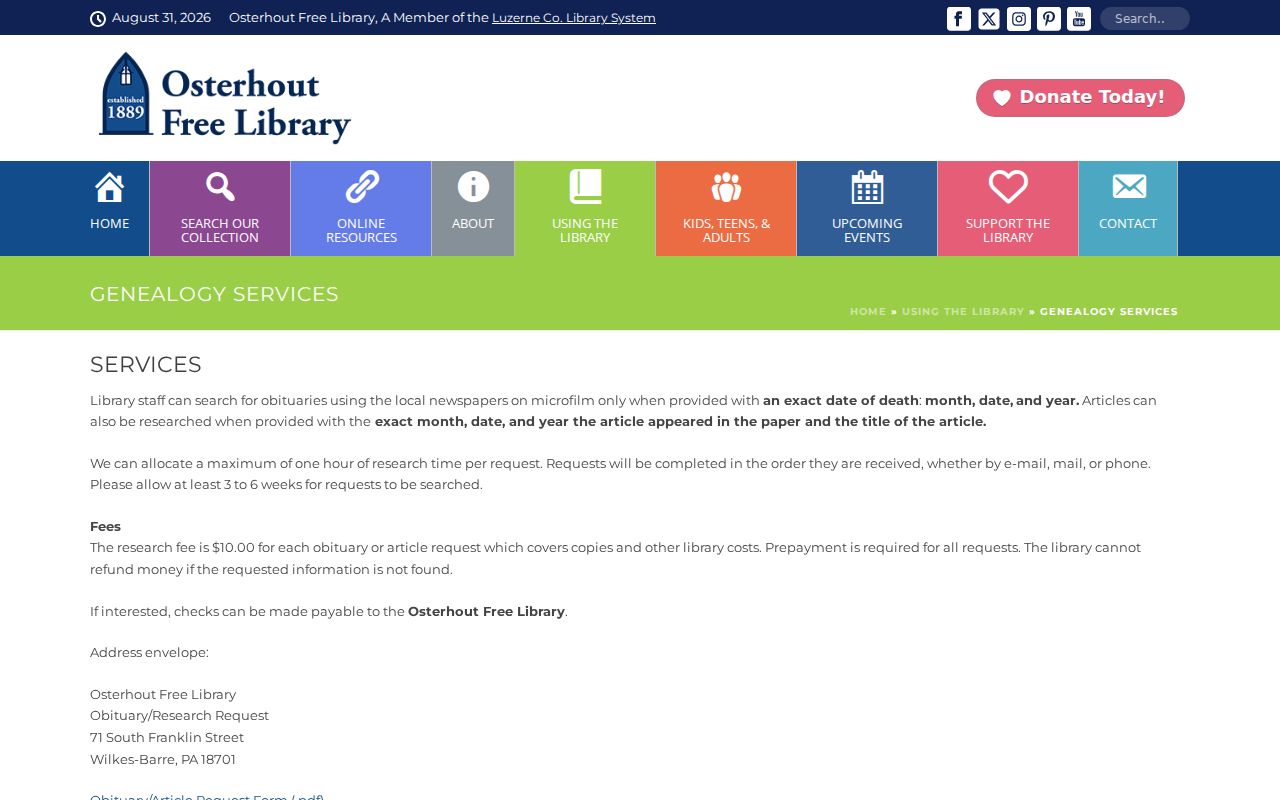
The library route is especially helpful when a directory year needs to be paired with its newspaper and census holdings rather than read alone.
Wilkes-Barre City Directory Shelves
Osterhout is at 71 S. Franklin Street and gives a remote option when there is a precise newspaper lead. Staff will search obituary microfilm when supplied the exact month, day, and year of death. The service allows up to one hour per request, states a three-to-six-week turnaround, and charges $10 prepaid for an obituary or article request. An exact article date and title can also support a request. A cemetery date, death index, probate reference, or family paper makes this route far stronger than a broad surname inquiry.
Osterhout lists Luzerne County census microfilm from 1790 through 1930, except 1890. Its newspaper runs include the Wilkes-Barre Record from 1891 to 1972, the Times Leader from 1950 to 2007, Sunday Independent material, and other library or cardholder resources. Census gives a dated household snapshot; yearly directories can show a change between census dates. The 1890 absence is real, so adjacent directory, newspaper, cemetery, and probate evidence may be needed to span that gap.
Note: Library access conditions vary by collection, so confirm whether a database requires a cardholder login or in-library use before relying on it.
Reading Wilkes-Barre City Directory Entries
LCHS describes its city directories as alphabetical listings much like a phone book. A typical listing can identify the head of household, spouse, occupation, work address, home address, and widow notation. Some volumes also include a street index. That means a directory can answer a careful historical question, such as whether a named household was listed at an address in a particular edition. It cannot establish that every person in a building was listed, or that a person still lives at an address now.
| Head of household | The named person under the alphabetical listing. |
|---|---|
| Spouse | A spouse may appear with the household entry. |
| Occupation | Historical work description, sometimes with a work address. |
| Home address | The address printed for that directory year. |
| Widow notation | A note that may help distinguish people with the same surname. |
| Street-index position | Available only in some editions for address-to-household research. |
- Criss-cross directory
- An address-ordered directory that can lead from a street and number to a printed historical listing.
- Householder index
- An alphabetical route to the named household entry rather than a list of all occupants.
- Abbreviation key
- A legend supplied by a particular volume, when present. No local scanned key was verified, so read the volume's own key first.
Use an address index as a lead, then cross-check the alphabetical entry and nearby years. The locally documented street index is not guaranteed in each volume. For a modern parcel or deed question, the separate Wilkes-Barre streets resource follows the current address-record chain instead.
Wilkes-Barre City Directories at LCHS
The Luzerne County Historical Society research collection adds the earlier 1871 starting point, surname files covering more than 13,000 names, vertical clipping files, manuscript collections, and the eight-volume Edward Phillips newspaper and local-history index. Its Bishop Memorial Library & Archives is at 49 S. Franklin Street. Visits are by appointment on Tuesday, Wednesday, Friday, and Saturday; the society gives 570-823-6244 and library@luzernehistory.org for arrangements. Its stated admission is $5 for a non-member adult, $3 for a child, and free for members.
LCHS also reports newspapers on microfilm from the early 1800s to 1949. The material is useful when a directory entry supplies a date, spouse, occupation, or address that can narrow a newspaper search. Newspapers are not fully indexed, so bring a date whenever possible. The Society's holdings can point to a primary record, but a clipping, surname file, or directory transcription should still be verified in the underlying volume or government record.
Consult the Historical Society's collection description before arranging an appointment.
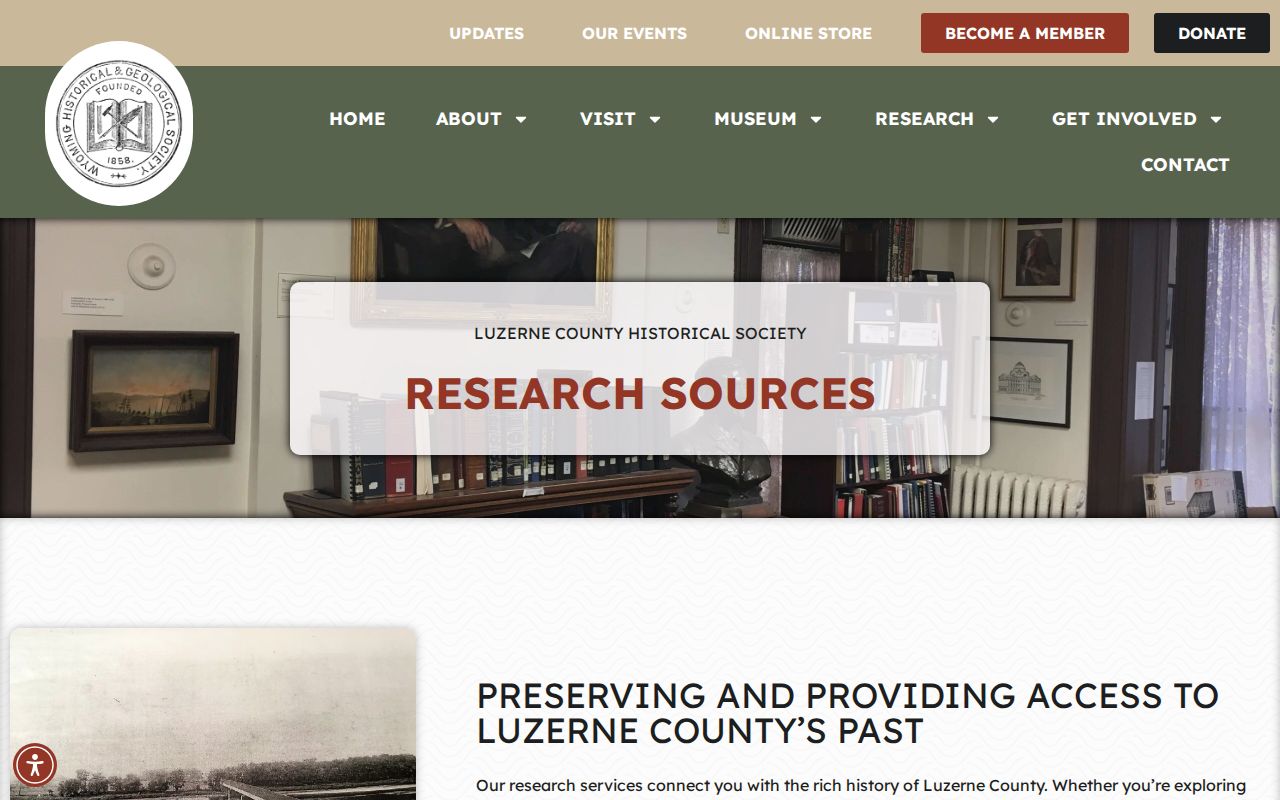
Its city-directory run and archive indexes make LCHS a strong stop when an Osterhout volume begins too late or a name needs context from maps and newspapers.
Wilkes-Barre City Directory Timeline
The historical record has clear changes of custody and format. LCHS reaches back to 1871. Osterhout begins its stated city-directory run in 1884, with a non-comprehensiveness warning. The named NEPGS Polk, telephone, and cross-reference volumes fill selected late-century years, but they do not prove an uninterrupted publisher series. This is why a researcher should document the volume seen, not write a date range as if every year survives in one place.
- 1871: LCHS reports the opening year of its Wilkes-Barre city-directory collection.
- 1884: Osterhout reports the start of its city-directory run.
- 1947-2001: NEPGS identifies selected Polk, telephone, and cross-reference editions.
- 2004: LCHS reports the endpoint of its listed directory run.
Note: Publisher names and a full year-by-year sequence require inspection of the individual Wilkes-Barre volumes, not a broad catalog claim.
Wilkes-Barre City Directories and Maps
A printed address can change meaning as wards, parcels, and street patterns change. LCHS holds an 1873 Luzerne County atlas, Wilkes-Barre ward maps from 1882, 1894, and 1904, a 1933 Sturdevant fire-insurance atlas, and early-to-mid-1900s Sanborn material. The Library of Congress also provides a digitized Wilkes-Barre Sanborn volume described as covering 1910 through February 1950 in 102 sheets. A map can establish building form, street, ward, and block context. It does not supply a household name.
Start with the directory year and street, locate the appropriate map sheet, then compare the historic address with the present parcel only when the geography supports that comparison. No verified source documented a citywide renumbering year. Ward or municipal changes can explain an apparent mismatch without proving that an address was renumbered. This map-to-directory method is safer than forcing a familiar modern number onto an older listing.
Note: A map edition is dated evidence of geography, not evidence that a named person occupied the building shown.
Tracing Wilkes-Barre City Directories
For family history, begin with a confirmed year, address, spouse name, event date, or occupation. Search the named person in that year's alphabetical directory, record the exact spelling and address, and then repeat in adjacent volumes. Pair the results with the available census year, newspaper notices, and public event records. A move from one address to another is a dated clue, not an identity conclusion. It becomes more useful when the name variant, spouse, address, and event timing agree across independent sources.
- Locate the earliest confirmed city directory listing and transcribe its year, name form, and address.
- Check the preceding and following editions for an arrival, move, widow notation, or disappearance.
- Use a street index only when that particular volume includes one, then confirm the name alphabetically.
- Match the closest available census year, remembering that 1890 is absent from the library's cited microfilm run.
- Use a dated obituary, cemetery record, probate index, or newspaper notice to test why a listing stops.
A directory result that needs modern verification should be tested through a dated official record, not assumed to describe a present household. For a one-person, record-by-record approach, use the Wilkes-Barre resident lookup.
Wilkes-Barre City Directory Gaps
A missing name has several ordinary explanations: the household was not listed, the library lacks that edition, the name appeared in abbreviated or variant form, or the person had moved or died. The city cemetery spreadsheet is a distinct historical clue when an early name disappears. Its documented fields include applicant name, occupation and residence, deceased identity, dates, birthplace, age, cause of death, and remarks such as removal to another cemetery. Treat it as an interment record, not a current address database.
The original Wilkes-Barre cemetery was near the current City Hall corner, with early burials later moved toward Hollenback or City Cemetery before City Hall construction. A removal remark can therefore explain why an early grave does not appear where expected. This local records detail is more useful than assuming a missing directory result means a person never lived in Wilkes-Barre.
Open the City Cemetery Records & Maps source when a directory disappearance coincides with a known death or burial date.
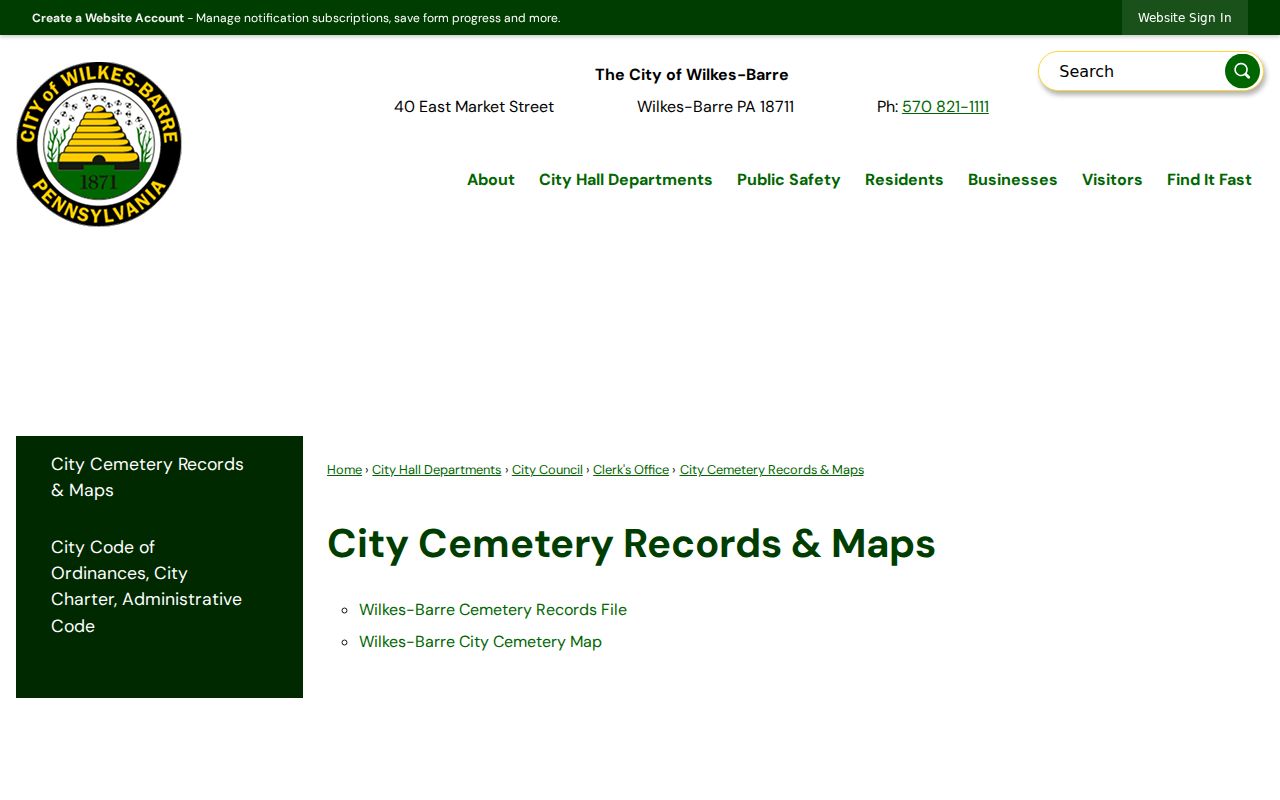
The municipal spreadsheet can provide a respectful date-and-place bridge to obituary, probate, and archive research, while its transcription details still need context checks.